Thursday, June 30, 2011

The UglyTruth: Diet Soda

Good evening everyone,

How's everybody doing this evening? By a show of hands, who drinks diet soda? It's ok if you do, don't be shy. Nobody is going to make fun of you, I promise. Well, for ya'll diet soda drinkers out there...Unfortunately, I have some bad news. According to recent data presented at the American Diabetes Association's (ADA) Scientific Sessions, it is suggested that diet drinks may actually contribute to weight gain and that the artificial sweeteners in them could potentially contribute Type 2 diabetes. Who would have thought? right. I mean the term 'diet' is usually perceived in terms of moving towards better health and increasing your overall well-being. In most cases, that statement does hold true but with regards to soft drinks it does not. So...what do we do with this information? you may ask. Well, hold that thought. Let's view the facts for a second.


In one study, researchers from the School of Medicine at The University of Texas Health Science Center San Antonio, looked at aggregate data from 474 older adults in the San Antonio Longitudinal Study of Aging, or SALSA. At the time of enrollment and at three follow-up exams thereafter, all participants reported their diet soda intake and were measured for height, weight and waist circumference. The researchers wanted to track any association between diet soda drinking and body fat over time.


What they found was that all participants saw their waistlines expand, but those who reported drinking diet soda had 70% greater increases in waistline growth than non-drinkers 9.5 years later. Among frequent drinkers — those who consumed two or more diet sodas a day — waistline growth was 500% greater than among non-drinkers. Researchers said their results were adjusted for other contributing factors like diabetes status, leisure-time physical activity level and age.

The data didn't say why diet sodas might play a role in weight gain, but previous research suggests it has to do with the disconnect between the taste of artificial sugars and their lack of calories. The brain is wired to expect a big load of calories when foods taste sweet or fatty. But because diet foods fail to deliver, it throws the brain out of whack. Studies in animals suggest that artificial sweetener consumption may lead to even more eating and weight gain, perhaps in part because it triggers the body to start storing more calories as fat.

Excess weight, especially around the belly, as measured in the SALSA participants, is a risk factor for a variety of ills, including cardiovascular disease and diabetes.

With that being said, perhaps it's time to switch to water. What do you think? I always say: "There ain't nothing like some ice cold water a.k.a. that cool refreshing drink, lol.


And For all those 'water haters', perhaps you should try Perrier. Maybe that will help you savor the flavor, hehe. True story. At any rate, I hope everyone enjoyed this post and found it informative. Have a wonderful evening. This is 'thedoc' and I'm signing out. Peace, Love, and God Bless.

P.S.
Fore more info on this topic, refer to Studies: Why Diet Sodas Are No Benefit to Dieters. Laters!

Thursday, June 2, 2011

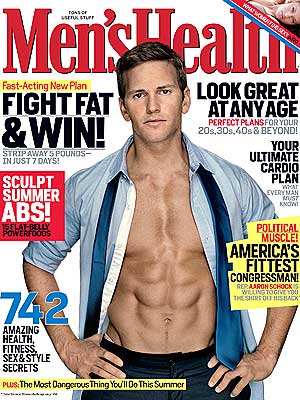
Aaron Schock challenges America to shape up!


My fellow Americans:

You have the power to change your life for the better. By making smart, simple food and fitness choices, you can take control of your health—and look and feel better than you have in years. (And you’ll even be helping our nation in the bargain.)

With the Fit for Life Summer Challenge, I’m challenging you—and all Americans—to sign up for an easy fitness plan than can help you drop 10, 20, even 30 pounds or more by Labor Day and get in the best shape of your life. I’ve teamed with Men’s Health and Women’s Health magazines to design a program that’s so easy and effective that I know it will work for you. (And it’s free.) By the end of the summer, you can slash your risk of heart disease, diabetes, stroke, and many other diseases dramatically.

How does that help America? Consider this: Health care may be the single biggest factor in our nation’s ongoing budget crisis. Yet 8 out of every 10 dollars we spend on health care is spent on diseases that are preventable; if only we took better care of ourselves. Think of the billions of dollars we could use for better infrastructure, renewable energy, and job creation. Not to mention a little more cash in your pocket.

I know how hard it is to start a fitness program. I got serious about my own health, went to a local health club, and asked for help. With focus, discipline, and knowledge about healthy eating, and only a few years later, Men’s Health declared me America’s Fittest Congressman. (Hey, it’s a small honor, but I’ll take it.)

Make this summer the summer you really get fit. It's contagious—once you start you’ll be fit for life. Research shows that if you can stick with a new diet and exercise plan for 5 weeks, you’re more likely to stay with it permanently. Don’t worry: We’ll give you everything you need. Motivation tips. Workouts you can do without equipment—or without much time. Nutrition tips that will help stay lean, even if you eat fast food once in a while. You can even track your weight and post before and after pictures here, so you can see your progress in real time.

Do it for yourself. Do it for your family. Do it for your country.

So tell me, America: Are you up for the challenge? If so, sign up today.

—Congressman Aaron Schock


Saturday, May 21, 2011

Do cell phones cause brain cancer?

Do cell phones cause brain cancer?


It may be too early to say for sure. The latency period or time between exposure and recognition of a tumor is around 20 years, sometimes longer. And, cell phone use in the U.S. has been popular for only around 15 years. Back in 1996, there were 34 million cell phone users. Today there are 9-10 times as many. Keeping that in mind, it is worth taking a more detailed look at the results of Interphone, a multinational study designed to try to answer this question.

The headline from this study was there was little or no evidence to show an association between cell phones and cancer. Though, if you went to the appendix of the study, which interestingly was available only online, you found something unsettling. The data showed people who used a cell phone 10 years or more doubled the risk of developing a glioma, a type of brain tumor. And, across the board – most of the studies that have shown an increased risk are from Scandinavia, a place where cell phones have been popular since the early 1990s. For these reasons, the whole issue of latency could become increasingly important.

Cell phones use non-ionizing radiation, which is very different from the ionizing radiation of X-rays, which everyone agrees are harmful. Non-ionizing radiation won’t strip electrons or bust up DNA. It's more like very low power microwaves. Short term, these microwaves are likely harmless, but long term could be a different story. Anyway, who likes the idea of a microwave, even a low-powered one, next to their head all day?

I didn't think so. With that being said, I recommend everybody use a wired earpiece when speaking on the phone. And...If you don't have one, please get one. It will benefit you in the long run. Anywho, I hope you found this post beneficial. For more regarding this story, check out this article entitled 'Gupta: Cell Phones, brain tumors and wired earpiece'.

Saturday, April 30, 2011

Muesli

Do you have high cholesterol? Are you tired of taking multiple medicines to bring down your cholesterol levels? Well, I've got good news for you. I've got the perfect remedy. It's called: Muesli.


Muesli (pronounced muse-lee) is a breakfast cereal that has been popular in Europe — especially Switzerland — for over 100 years. It’s made from raw, rolled whole grains like oats, barley, rye, triticale, and wheat and typically contains nuts and dried or fresh fruit.

Muesli was developed by the Swiss physician Maximilian Bircher-Benner around 1900 to serve to patients in his hospital in Zurich. The diet that Bircher-Benner prescribed to his patients was heavy on whole-grains and fresh fruits and vegetables, and Bircher-Benner came up with idea of Muesli after being served a similar dish during a hike in the Swiss Alps.

While popular in Switzerland and parts of Europe for decades, it wasn’t until the health food movement of the 1960s that this tasty and uber-nutritious cereal started to gain fans in the United States. Since then, Muesli has become much more widely available not only in health food stores, but also in mainstream markets and grocery stores.

Muesli is an ideal health and fitness food.

Why?

It’s a great source of sustainable energy from slow-burning, complex carbohydrates; has plenty of trace vitamins and minerals; and meets the criteria of a “whole food” because it’s minimally processed. Depending on the recipe, the health benefits of Muesli include:

Fiber: Depending on the mixture of whole grains and fruits used, Muesli is an excellent source of both soluble and insoluble fiber. When prepared with oats and barley flakes, Meusli is very high in viscious soluble fiber (also known as “sticky fiber”) which research has shown can help control blood sugar, reduce serum cholesterol levels and aid in digestion. The soluble fiber in Muesli can also be increased through the addition of fresh or dried fruits like dates, raisins or fresh apples.

Whole Grains: The USDA recommends that Americans should eat 6-11 servings of grains each day, preferably whole-grains that contain the entire grain kernel: endosperm, germ and endosperm. Whole grains are not only a great source of fiber, but they also contain trace amounts of vitamins and minerals, as well as hundreds of different phytochemicals that scientists and nutritionists believe work together syngergistically to reduce the risk of certain diseases, including cancer and heart disease. Because Meusli is made with raw, whole-grains that are rolled, you get the maximum health benefits from the cereal. And because the original nutrients are kept intact, it’s not necessary to replace them with synthetic vitamins like you find in many fortified, pre-packaged cold cereals.

Sustained Energy from Complex Carbohydrates: If you’re looking for a superb pre-workout meal to fuel your training at the gym, high intensity interval training or biking, Meusli is second-to-none. Because it’s made from whole grains and fruit, Meusli is a fantastic source of slow-burning complex carbs that will keep your energy levels stable over the duration of your exercise. The high fiber content of the cereal, combined with the healthy fats, also places it much lower on the glycemic index that most cold cereals. This reduces blood insulin spikes that can leave you fatigued later in your workout.

Healthy Fats: Because nearly all Muesli recipes include nuts and seeds, Muesli is also an excellent source of healthy monounsaturated fats, as well as heart and brain-healthy omega-3 fatty acids. Nuts, especially walnuts, pecans and almonds also contain powerful phytochemicals and antioxidants that may protect the body from tissue damage as well as cancers. Walnuts, for example, have been shown to reduce the damaging effects of meals that are high in unhealthy saturated fats, and a study conducted by Dr. David Jenkins at the University of Toronto and published in the AHA journal “Circulation” demonstrated that almonds can help reduce blood cholesterol levels. Nuts also have been found to decrease feelings of hunger.

Fruit: The USDA also recommends that people eat at least seven servings a day of fresh fruits and vegetables. “Fresh” includes dried fruits, as well as frozen — which may actually have higher vitamin and mineral content due to their ripeness and how they are preserved. While dried fruit is found in many Muesli recipes, the addition of fresh fruit like chopped apples or blueberries is also a great addition. Fruits and vegetables are not only good sources of fiber, but also are high in healthy antioxidants that can aid with recovery and repair post-workout.

Milk/Soy Milk Protein: Skim milk, which Meusli is often served with or soaked in, is a good source of calcium and slow-digesting casein proteins. Having plenty of protein available during your workout or training can help with muscle repair and recovery and preserve lean tissue, even under stress. Substituting soy milk every now and then (or always, if you are a vegan or vegetarian) also can have health benefits, especially around controlling or lowering cholesterol. If you want to boost the protein in your Muesli even more, consider adding a scoop of whey protein to milk.

Lowering or Controlling Cholesterol: The combination of soluble fiber and nuts in Muesli can work together to help control or reduce serum blood cholesterol levels, especially if you serve it with soy milk. Soy has been shown to be one of four cholesterol-lowering “superfoods” that when combined into a portolio diet with other cholesterol-lowering foods like nuts, viscous fiber and plant sterols, can reduce blood cholesterol levels as effectively as prescription statin drugs. Muesli is a nearly perfect “portfolio meal” for lowering cholesterol because when served with soy milk, it has three of the four key cholesterol-lowering foods already in it.

With that being said, Muesli is not only healthy but it's delicious & nutritious. If you're looking to lower your cholesterol or just eat healthier, Muesli is definitely for you. Matter of fact, I here a bowl of Muesli calling my name right now. So...until later, live healthy! This is 'thedoc' and I'm signing out. Peace, Love, and God Bless.

P.S.
For more info about Muesli including Homemade recipes, go here.

Fact or myth? An apple a day keeps the doctor away

Good afternoon everyone,

Happy Saturday! How's everybody doing today? Good, I presume. At any rate, I'm sure you all can recall little health tips that your parents used to say as a toddler. For example, "Drink your milk, it builds strong bones!" or perhaps "Eat your carrots! It helps w/ your eyesight." And my personal favorite: "An apple a day keeps the heart disease doctor away." The memories...(insert sigh) With that being said, have you ever wondered whether all that was true? I know I have. Hence, the reason for this post lol. Therefore, today, I'm going to examine whether or not an apple a day keeps the doctor away. Sounds good? Awesome! :-)


According to studies conducted by FSU, researchers found that by snacking on apples for 6 months, people lowered their cholesterol on average by 23%. How so? you may ask. Well, their “bad” LDL cholesterol dropped by 23% while their “good” cholesterol, which helps remover fatty deposits from blood vessels, increased by 4%.

This was indeed a pleasant surprise b/c it occurred by accident. Originally, a snack of 75 grams of dried apple was meant for a "control group" in a study on the effect of eating prunes for bone density. Instead, it was given to a randomly selected group of women. According to Dr. Bahram Arjmandi he "never expected apple consumption to reduce bad cholesterol to this extent.”

According to Dr. Arjmandi, there is no other single food that can lower LDL by such a large amount. Dried apples were used to ensure that everyone ate exactly the same amount. Dr. Arjamandi speculates that it was the apple pectin, a soluble fiber, that also caused weight loss of 3.3 lbs, or 1.49 kilograms per person, on average.

Perhaps that is the case but further studies are needed. But if you worry about cholesterol as a heart disease symptom or about stroke symptoms, eating an apple or two per day would be the equivalent of the dried fruit used in the study.

With that being said, I deem this childhood health tip a FACT. Therefore, I encourage you all to eat an apple a day b/c it indeed does keep the doctor away ;-)

Tuesday, March 1, 2011

Intrexon: The Google of the Life Sciences

Good afternoon everyone,

In my spare time, I enjoy following the stock market. What can I say? It's pretty interesting. At any rate, I've been following this new synthetic biology company named Intrexon. Have you ever heard of it? If not, allow me to enlighten you ;-)

Intrexon Corporation develops transcriptional therapeutics for critical human diseases. Its goal is to make protein drugs far more cheaply and efficiently than is ­possible today. In addition, to transform living cells into tiny molecular factories to make everything from gasoline to ­construction materials. Some of their scientists even want to create entire new life forms from scratch. Cool, right?

At the moment, Intrexon is working on better protein-based drugs, gene therapy, industrial enzymes, and ag-biotech. What makes this company so great is...Almost nobody has heard of it and its lead scientist Thomas Reed. Thomas Reed is “the Henry Ford of DNA” and he figured what bioengineers needed to turn fantasy to fact was a library of standardized DNA components that could then be used to construct designer genes from scratch. He has spent the last ten years trying to build them and has come up with of 70,000 DNA parts that can be used to control gene expression.

Originally, Reed’s idea was to be a service business that sold DNA parts to researchers in academia and industry but w/ the encouragement of Randal J. Kirk this idea has developed into something BIGGER. In 2009, Mr. Kirk took over as chief executive of Intrexon and created distinct divisions for making various applications of Reed’s modular DNA technology.

With that being said, Intrexon is currently in the early stages of developing this new gene therapy method. This method aims to deliver powerful immune system proteins just where they are needed to kill cancer cells while avoiding healthy tissues. The first version of it, in testing for metastatic melanoma, takes immune system dendritic cells from the body and modifies them with Reed’s synthetic DNA so they can produce high levels of a cancer-killing protein called IL-12. They are injected back into the tumor, where they become little bioreactors that release IL-12. Sharpening its efficacy, the gene therapy is not activated until a patient takes a pill, controlling how much of the protein is released at what time.

To move the gene therapy work forward, Captain Kirk (lol) inked a deal in January for a 12% stake of Ziopharm Oncology, a biotech company led by former Memorial Sloan-Kettering Cancer Center surgeon Jonathan Lewis. It will move the IL-12 drug and other cancer gene therapy approaches through human trials while Intrexon continues to work on basic science.

With that being said, do you believe Captain Kirk's plan will work? Do you believe Intrexon's new gene therapy will be a sucess? Personally, I do. Hence, the reason why I'm choosing to share this info w/ you. At any rate, I hope you enjoyed this so-called company profile on Intrexon. For more info check out the following links:

The Next Big Move for The Smartest Biotech Investor
Blackburg's Intrexon: Branching out in Biotech
Intrexon Official website

Tuesday, February 22, 2011

What motivates you?

Good evening everyone,

How are you? Tonight, I would like to discuss the topic of motivation.

Motivation is what drives us to achieve goals. It's the arousal, direction, and persistence of behavior that formulates this driving force. Motivation can be intrinsic or extrinsic.

Intrinsic motivaion refers to motivation that is driven by interest or enjoyment in a task itself. Personally, I fall under this category, What motivates me is helping people. It's a passion of mine. This passion led me to want to become a be a doctor. At a very young age, I took interest in the sciences and/or anything health related. Over the years, this passion developed into a love. As a result, this love for helping others has defined me as an individual. Quite the story huh? lol. On the other hand, not everyone is like me. He/she could have been motivated by external factors such as rewards, punishments, competition, and so on. This is where extrinsic motivation comes into play. Extrinsic motivation comes from outside the individual.

There are 2 basic types of thories that describe motivation. They are:

content-what energizes behavior
and
process-how behavior is energized

With that being said, what factors do you believe motivate you?

According to Maslow's Hierarchy of Needs, human beings have wants and desires which influence their behavior. Only unsatisfied needs influence behavior, satisfied needs do not.Since needs are many, they are arranged in order of importance, from the basic to the complex.The person advances to the next level of needs only after the lower level need is at least minimally satisfied. The further the progress up the hierarchy, the more individuality, humanness and psychological health a person will show.
The needs, listed from basic (lowest-earliest) to most complex (highest-latest) are as follows:

Physiology (hunger, thirst, sleep, etc.)
Safety/Security/Shelter/Health
Belongingness/Love/Friendship
Self-esteem/Recognition/Achievement
Self actualization

Herzberg's two-factor theory a.k.a. intrinsic/extrinsic motivation, concludes that certain factors in the workplace result in job satisfaction, but if absent, they don't lead to dissatisfaction but no satisfaction. The factors that motivate people can change over their lifetime,but "respect for me as a person" is one of the top motivating factors at any stage of life.

He distinguished between:

Motivators; (e.g. challenging work, recognition, responsibility) which give positive satisfaction, and
Hygiene factors; (e.g. status, job security, salary and fringe benefits) that do not motivate if present, but, if absent, result in demotivation.

Other notable content theories include: Deci's Self-Determination Theory, Reiss' Theory, and McClelland's Theory.

In contrast, process theories attend to the context in which taska are performed. These theories include:

Equity theory, in which people compare themselves to others and contrast their percieved inputs to them.

Goal setting theory which emphasizes setting specific goals to achieve performance.

Expectancy theory which assumes people are rational decision makers.

Other notable process theories include the reinforcement theory and job-characteristic model.

With that being said, motivation is what drives us to achieve our goals. Everyone is motivated by different factors whether they are intrinsic or extrinsic. Regardless of whatever the factors may be, whether or not you achieve your goals is solely up to you. Therefore, I encourage you to:

1. Think BIG! but be realistic w/ yourself.
2. Set both short & long-term goals and stick to them.
3. Be your own BIGGEST fan! There's no better motivator than yourself ;-)
4. Do what makes you happy! For if you're willing to put forth the necessary effort into achieving your goals you will do so w/ optimal performance which will lead to your desired outcome.

and Remember: